Models of care
Karabena Consulting designs models of care with the communities and services that will use them, across child and family health, maternity and the perinatal period, cancer, custodial health, emergency care and cultural healing.
Our design work begins with the pathway as people actually travel it, including the points at which Aboriginal and Torres Strait Islander families step away from a service and the reasons they give for doing so, and it draws on the cultural determinants of health to put kinship, Country and community authority into the structure of the model itself.
We build each model so that the service can hold it after we leave, with the protocols, workforce roles and governance a model needs to become ordinary practice.
The work below shows where we have done it.
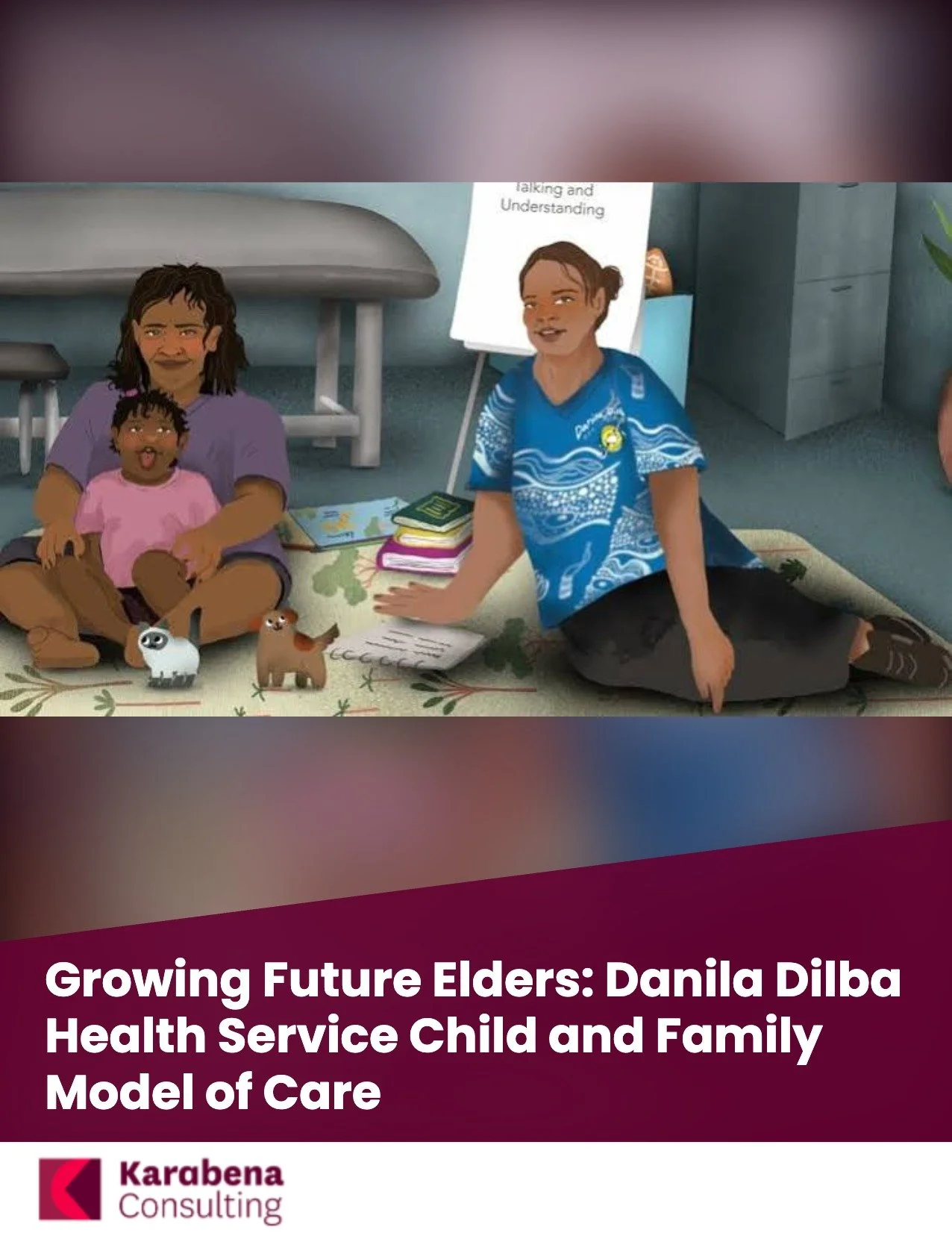
Karabena Consulting and First 1000 Days Australia worked with Danila Dilba Health Service (DDHS) to develop Growing Future Elders: Child and Family Model of Care. The model guides the redesign of child and family services across DDHS and brings existing services into a clearer life-course pathway.
February 2026 – May 2026
The Digital Cancer Navigation Service is a national initiative led by Cancer Council Australia to improve access to high quality and culturally safe cancer information and support for all people affected by cancer, with a focus on priority populations.
Karabena Consulting was engaged by Cancer Council Australia to lead the First Nations component of the project, supporting the design and delivery of the service to ensure that the design and delivery of the service meets the needs of Aboriginal and Torres Strait Islander peoples through culturally appropriate and community-informed approaches. This included work to enhance the cultural responsiveness of Cancer Council’s 13 11 20 Cancer Information and Support Line for Aboriginal and Torres Strait Islander peoples.
November 2024 - June 2025
Karabena Consulting was engaged to evaluate the co-design process underpinning South Australia’s Child and Maternal Continuity of Care Protocols (CCP) Program. The project aimed to strengthen how Aboriginal voices inform the design of culturally safe, coordinated care for Aboriginal children aged 0–4 years and mothers of Aboriginal babies.
July 2024 - June 2025
Karabena Consulting worked with the Victorian Aboriginal Health Service (VAHS), Corrections Victoria, Justice Health and GEO to develop and document an Integrated Aboriginal Justice Health Model for implementation at Marngoneet Correctional Centre. The model supports the social, emotional, cultural, and physical wellbeing of Aboriginal people in custody through integrated care, continuity of support post-release, and lived-experience peer workforces.
February 2025 – May 2025
The Royal Commission into Victoria’s Mental Health System (2021) recommended a review of approaches to perinatal mental health screening to address inclusivity, cultural appropriateness and the therapeutic context of screening (recommendation 18.2).
A subsequent independent review of perinatal mental health screening in Victoria (2023) delivered ten recommendations in response to the findings of the Royal Commission, including a recommendation for the development of the Victorian perinatal mental health screening guidelines (‘the guidelines’), informed by co-design approaches with Aboriginal people.
May 2024 - October 2024
The purpose of this project was to present a summary of key themes and proposed changes for expert consideration for the refresh of the Optimal Care Pathway (OCP) for Aboriginal and Torres Strait Islander people with cancer, as informed by a rapid review of published evidence and stakeholder consultation activities.
Project Timeline: October 2023 – June 2024
This project is part of the larger Cultural Audit project Karabena is undertaking with SVHM to actively improve health and wellbeing outcomes for Aboriginal and Torres Strait Islander staff, patients and their families by improving the cultural safety of the hospital.
Project Timeline: November 2022- February 2023
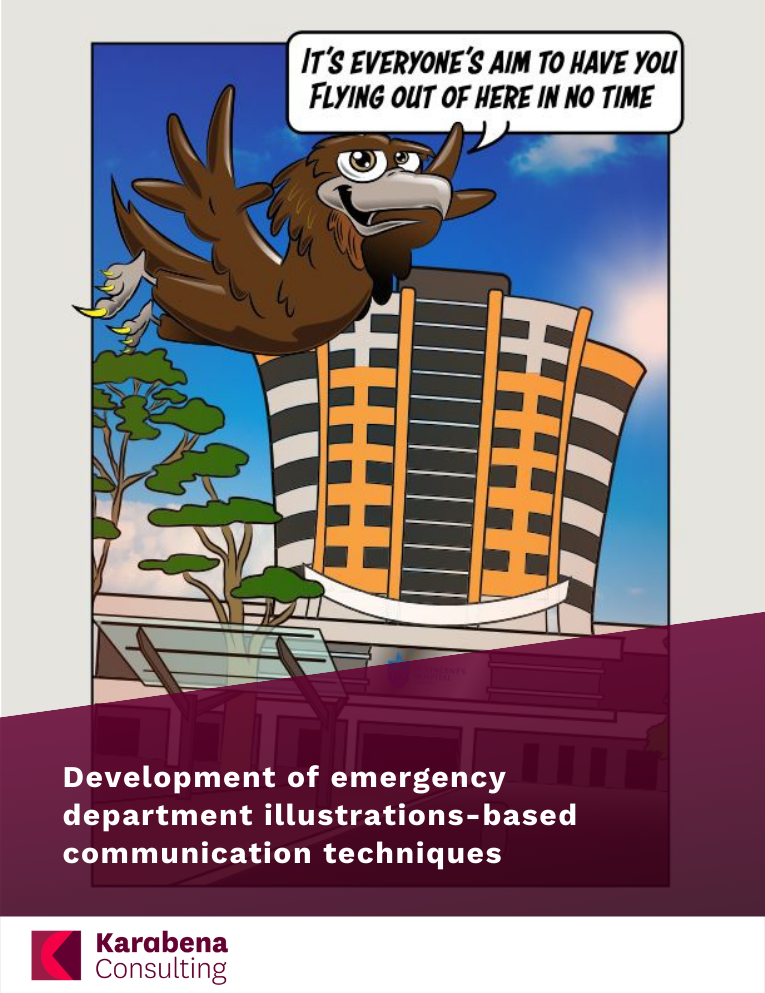
Karabena Consulting was engaged by ACEM to develop illustrations to assist with culturally safe communication between clinicians and Aboriginal and Torres Strait Islander patients in Emergency Department (ED) settings. The project stemmed from the recommendations of the Traumatology Talks – Black Wounds, White Stitches report.
Project Timeline: August 2021 – February 2022